Why Viewing a Home at Night Matters
Prefer Homeowner Blog in Google Search
Why Viewing a Home at Night Matters
For property buyers, an inspection during daylight hours can reveal plenty about a home. Natural light shows off rooms, gardens and views, while photographs and styling can make a property look particularly appealing.
But there is another side to a property that can be easy to miss when every inspection takes place in the middle of the day.
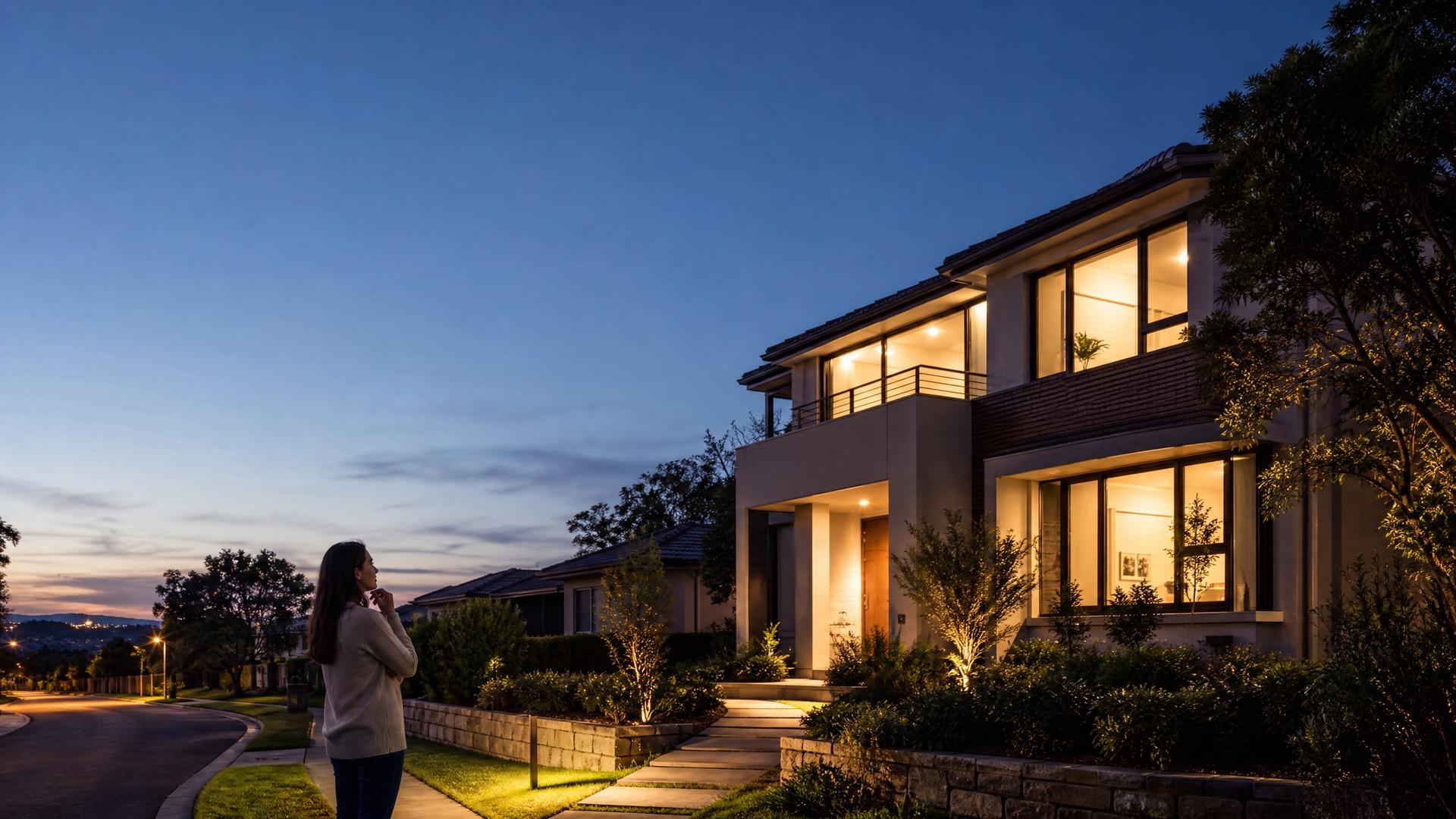
As more buyers recognise that they will experience their future home at different times of day, evening inspections are becoming an increasingly useful part of the property search. A home that looks perfect at 11am may feel very different after sunset, when the neighbourhood's traffic, noise, lighting and atmosphere become more apparent.
For buyers, that difference can be significant.
Assess the neighbourhood soundscape
One of the biggest advantages of an evening visit is the opportunity to assess noise. During business hours, a street may appear remarkably quiet, only to become considerably busier when residents return from work and school.
Traffic volumes can increase, neighbours may be using outdoor areas and nearby hospitality venues can become more active. A property located near a major road, railway line, sporting facility, restaurant precinct or entertainment area may have an entirely different soundscape at night.
“A home isn't just a place you inspect in daylight—it’s a place you will live in around the clock.”
Noise is particularly important for buyers who work from home, have young children or value a quiet environment. Even buyers who are comfortable with some activity may want to understand whether the level of noise matches their expectations before committing to a purchase.
Test privacy after dark
Evening inspections can also reveal how well a home is positioned for privacy. During the day, landscaping and fences can appear to provide substantial separation from neighbouring properties. At night, lighting can change the picture.
Bright outdoor lights, illuminated neighbouring windows and poorly positioned security lighting can affect how private a backyard, balcony or living area feels. Buyers can also observe whether bedrooms or living spaces are directly exposed to nearby homes.
Lighting within the property itself deserves attention. A home that receives abundant natural light during the day may have darker areas after sunset. Buyers can assess whether rooms have adequate artificial lighting and whether the existing fittings create the atmosphere they would want.
Consider how outdoor spaces work in the evening
Gardens, balconies and entertaining spaces often feature prominently in property marketing, but their usefulness can depend on how they feel at night.
Is the backyard adequately lit? Does the outdoor entertaining area feel comfortable? Are pathways easy to navigate? Is there sufficient lighting around entrances, garages and other access points?
These details may not determine a purchase on their own, but they can contribute significantly to day-to-day liveability.
Look at security and street comfort
Security is another factor that becomes more visible after dark. Buyers can consider how easily the property can be accessed, whether entrances are well illuminated and how the surrounding street feels once daylight disappears.
A dark or poorly lit street is not necessarily a problem, but it is worth understanding how comfortable the buyer feels arriving home at night.
The surrounding neighbourhood can also provide information that may not be obvious during a daytime inspection. Buyers can observe pedestrian activity, parking demand and the general atmosphere of nearby streets.
For apartment buyers, this can be particularly useful. Common areas, building entrances and surrounding streets can feel substantially different in the evening. Buyers may notice people arriving home from work, visitors using shared facilities or increased activity around nearby businesses.
Check parking and commuting conditions
Parking is another issue worth considering. A street with plenty of available spaces during the day may become heavily occupied in the evening when residents return home. Buyers relying on street parking should consider what availability looks like during the hours when they are most likely to need it.
Public transport and commuting patterns can also be assessed more realistically. Buyers may want to determine how convenient their journey would be outside traditional daytime inspection hours, particularly if they expect to travel early in the morning or return home late.
For families, evening inspections can provide insight into the broader lifestyle of a location. Buyers can see whether local parks and recreational spaces remain active, whether the area feels family-oriented and how convenient nearby amenities are once the working day is over.
Use a second viewing to gain perspective
There is also a psychological element to visiting a home at night. Daylight can make almost any property feel brighter and more spacious. Darkness removes some of that visual advantage and encourages buyers to pay closer attention to how the property actually feels.
This can be particularly valuable when buyers are emotionally drawn to a property. A second inspection at a different time can help separate the initial excitement of an open home from a more realistic assessment of everyday living.
That does not mean buyers should automatically reject a property that feels different at night. Every neighbourhood has its own rhythm, and increased activity can be a positive feature for some buyers.
Someone who enjoys restaurants, nightlife and a lively street may see evening activity as an advantage. Another buyer may consider the same conditions undesirable.
The important point is understanding what the property and neighbourhood are actually like rather than making assumptions based on a single daytime inspection.
Visit at more than one time if possible
Buyers should also remember that one evening does not necessarily represent every night. Weekday and weekend conditions can differ considerably. A Saturday evening may produce a very different experience from a Tuesday night.
Where possible, buyers can make multiple visits at different times before making a final decision. This can be particularly useful for properties near schools, transport corridors, commercial areas, sporting venues or entertainment precincts.
Technology can provide additional clues. Buyers can research traffic patterns, public transport services, local amenities and nearby development plans, but these tools should complement rather than replace physically experiencing the area.
A buyer's agent can also provide valuable local insight, particularly when it comes to understanding how a suburb changes throughout the day and week.
For buyers inspecting independently, simply asking local residents about the neighbourhood can sometimes uncover information that is difficult to find online. Questions about traffic, noise, parking and evening activity can provide another perspective.
Ultimately, purchasing a property is about more than what it looks like in marketing photographs. It is about how it functions as a home.
Daytime inspections remain essential, but viewing a property after dark can reveal another layer of information—one that may influence comfort, privacy, security and lifestyle for years to come.
The perfect property does not need to be flawless at every hour. But buyers should understand what they are buying at all hours.
Taking the time to see a home in a different light—quite literally—can turn a visually appealing property inspection into a far more informed purchasing decision.
More from Buyers

How to Choose Between House and Townhouse in Your Budget
Discover the key differences between houses and townhouses to make an informed property decision. Compare costs, lifestyle factors, and investment potential to find the perfect fit for your budget and goals.

What Family Home Buyers Must Understand Before Committing
As Australia's housing market continues to move at a frantic pace in 2026, family home buyers are increasingly finding themselves making decisions under intense time pressure.

Time Pressure Is Causing Costly Mistakes for Family Home Buyers
Whether the rush is caused by a job relocation, an expiring lease or fear of missing out in a competitive market, the consequences of hasty decisions can be significant.