Love Livin' in St Helens TAS 7216
Prefer Homeowner Blog in Google Search
Love Livin' in St Helens TAS 7216
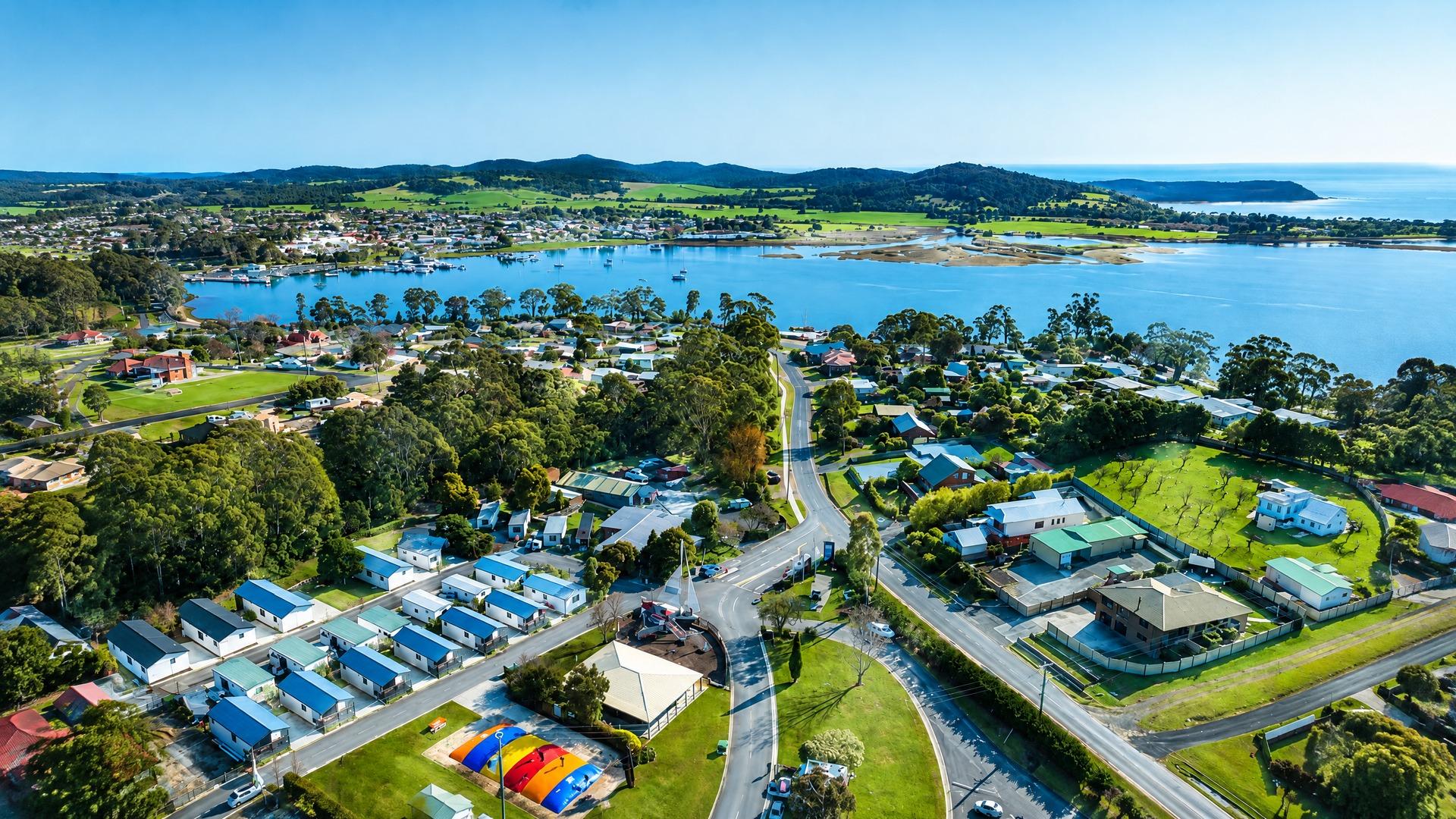
A coastal service town with an outdoorsy tempo
St Helens sits on Tasmania’s north-east coast, overlooking Georges Bay and about 163 kilometres, or roughly a two-hour drive, east of Launceston. It is the largest town on this stretch of coast, so daily life is shaped by two roles at once: it is a working regional centre for the Break O’Day municipality and a base for visitors heading towards the Bay of Fires. [1]
That combination gives the town a distinctive rhythm. Mornings can begin with a walk or bike ride beside the bay, a school run through the compact town centre or a trip to the shops before heading to work. Later, the foreshore, jetties and beaches draw people outside. Fishing, boating and seafood are not simply visitor themes here: Tourism Tasmania describes St Helens as Tasmania’s game-fishing hub and second-largest fishing port. [1] Holiday periods bring more traffic, while cooler months feel more local.
The town is not a substitute for a capital-city lifestyle. Specialist shopping, some medical services and broader cultural or employment choices may require travel. For buyers, that trade-off is central to understanding St Helens: convenience within the local district, paired with regional distance from Launceston and Hobart.
Bay, beaches and a layered local history
The landscape is the main address card. Georges Bay gives the town a sheltered waterside edge, while St Helens Point Conservation Area, Beauty Bay and the beaches around Binalong Bay extend the coastal setting. Break O’Day Council describes a shared pedestrian and cycleway following the Georges Bay foreshore, passing playgrounds and Beauty Bay, where there is a grassy picnic area, barbecue, fishing jetty, toilets and an outdoor shower. [2]
North of town, larapuna / Bay of Fires is a defining natural attraction rather than a generic beach day out. Tasmania Parks and Wildlife Service identifies its orange-lichen-covered granite, white sand and clear water, with swimming, fishing, kayaking, snorkelling, diving, camping and birdwatching among the activities. The conservation area also contains Aboriginal cultural heritage, including midden sites, and visitors are asked to leave these places undisturbed. [3]
St Helens also has a strong mountain-to-sea identity. The local trail network includes stacked loops south of the township and the 42-kilometre Bay of Fires trail, which runs from the Blue Tier towards the coast. [2] Coastal walks, boat ramps and fishing spots make recreation easy to fold into an ordinary week.
The St Helens History Room records Indigenous heritage, maritime history and the experiences of local pioneers, including Chinese tin miners. The town’s identity is tied to the sea, mineral extraction and regional movement, not scenery alone. [4]
Practical services and community life
For a town of its scale, St Helens provides a useful concentration of everyday services. Break O’Day Council is based on Georges Bay Esplanade, and the council’s visitor information centre operates from Cecilia Street behind the library and opposite the post office. It provides maps, park passes and local information, while the adjoining History Room adds a community-facing cultural resource. [2]
Health care is anchored by St Helens District Hospital and Community Centre on Annie Street. The Tasmanian Department of Health lists nine acute and palliative-care beds, a four-bay outpatient and emergency service, allied health, radiology, community nursing and visiting providers. [5] That is meaningful local infrastructure, although residents with complex or highly specialised needs should establish where referral services are delivered before moving.
Community life is connected to the calendar and the landscape. Council information highlights events such as the Bay of Fires Winter Arts Festival, the St Helens Game Fishing Classic and the St Helens Regatta. Seafood and East Coast produce shape local food culture, while the foreshore, trails and beaches provide meeting places. The result is a town where community participation can be visible and practical, but where some amenities and events may be seasonal.
Schooling, buses and the regional connection
St Helens District High School is a government primary and secondary school at 9 Circassian Street. The Department for Education, Children and Young People says it caters from Kindergarten through Year 12 and offers academic, vocational and personal pathways, including TASC and VET opportunities for senior students. [6] For families, having the full school journey represented locally is a notable feature; course availability can still depend on enrolments and current offerings.
Public transport exists, but it is regional rather than frequent urban transit. Transport Tasmania lists route 740 between Launceston and St Helens, along with routes linking St Helens with other East Coast communities and services towards Hobart. Timetables should be checked carefully for the day and purpose of travel. [7] A car is likely to remain important for work, shopping beyond town, school activities and access to reserves. Launceston is the nearest major city connection, while the surrounding road network opens towards Binalong Bay, the Blue Tier and the Fingal Valley.
Housing character and questions for buyers
Housing in St Helens is best understood street by street. The town includes established homes close to the bay and town services, modest family properties, and houses on larger or more open parcels towards the edges. Nearby coastal settlements have a different feel again, with more holiday-oriented housing and greater exposure to visitor demand. A home’s outlook, access to the foreshore, slope, wind exposure and distance from services can matter as much as its postcode.
Buyers should inspect beyond presentation. Confirm planning controls, the exact zoning and any coastal, bushfire, flood or erosion considerations with Break O’Day Council and the relevant Tasmanian authorities. Check whether a property relies on town services or on-site systems, and investigate road access, mobile and internet performance, heating needs and insurance availability. Older homes warrant careful review of maintenance, salt-air corrosion and energy efficiency.
No single description captures the whole market, and this guide does not provide prices or forecasts. Recent comparable sales, independent building advice and a conversation with council are more reliable than assuming that a waterfront address, holiday appeal or proximity to the Bay of Fires will translate into a particular outcome.
Who St Helens may suit
St Helens may suit households seeking a smaller regional town with a genuine service base, a Kindergarten-to-Year-12 school and immediate access to water, beaches and bush. It can appeal to people who enjoy fishing, walking, cycling, boating, mountain biking or a slower daily pattern that still includes practical institutions. It may also suit buyers wanting a base for the north-east coast while remaining within driving reach of Launceston.
It may be less suitable for someone who needs frequent metropolitan public transport, a deep pool of specialised employment, extensive nightlife or highly specialised health care close to home. The strongest fit is someone comfortable with regional distances and interested in a place where the foreshore, school, hospital and events shape everyday life.
Sources
[1] Discover Tasmania: St Helens
[2] Break O’Day Council: Visit Us
[3] Tasmania Parks and Wildlife Service: Bay of Fires Conservation Area
[5] Tasmanian Department of Health: St Helens District Hospital and Community Centre
[6] Department for Education, Children and Young People: St Helens District High School
More from Love Livin' series

Love Livin' in Bronte NSW 2024: Your Complete Suburb Guide
Bronte NSW 2024 offers exclusive beachside living with a family-friendly atmosphere, stunning ocean pool, and strong community spirit.

Love Livin' in Potts Point NSW 2011: Your Complete Suburb Guide
Potts Point NSW 2011 combines inner-city sophistication with bohemian charm, offering excellent dining and vibrant nightlife.

Love Livin' in Darlinghurst NSW 2010: Your Complete Suburb Guide
Darlinghurst NSW 2010 offers cultural and arts district with excellent amenity and lifestyle options.