Love Livin' in Robe SA 5276
Prefer Homeowner Blog in Google Search
Love Livin' in Robe SA 5276
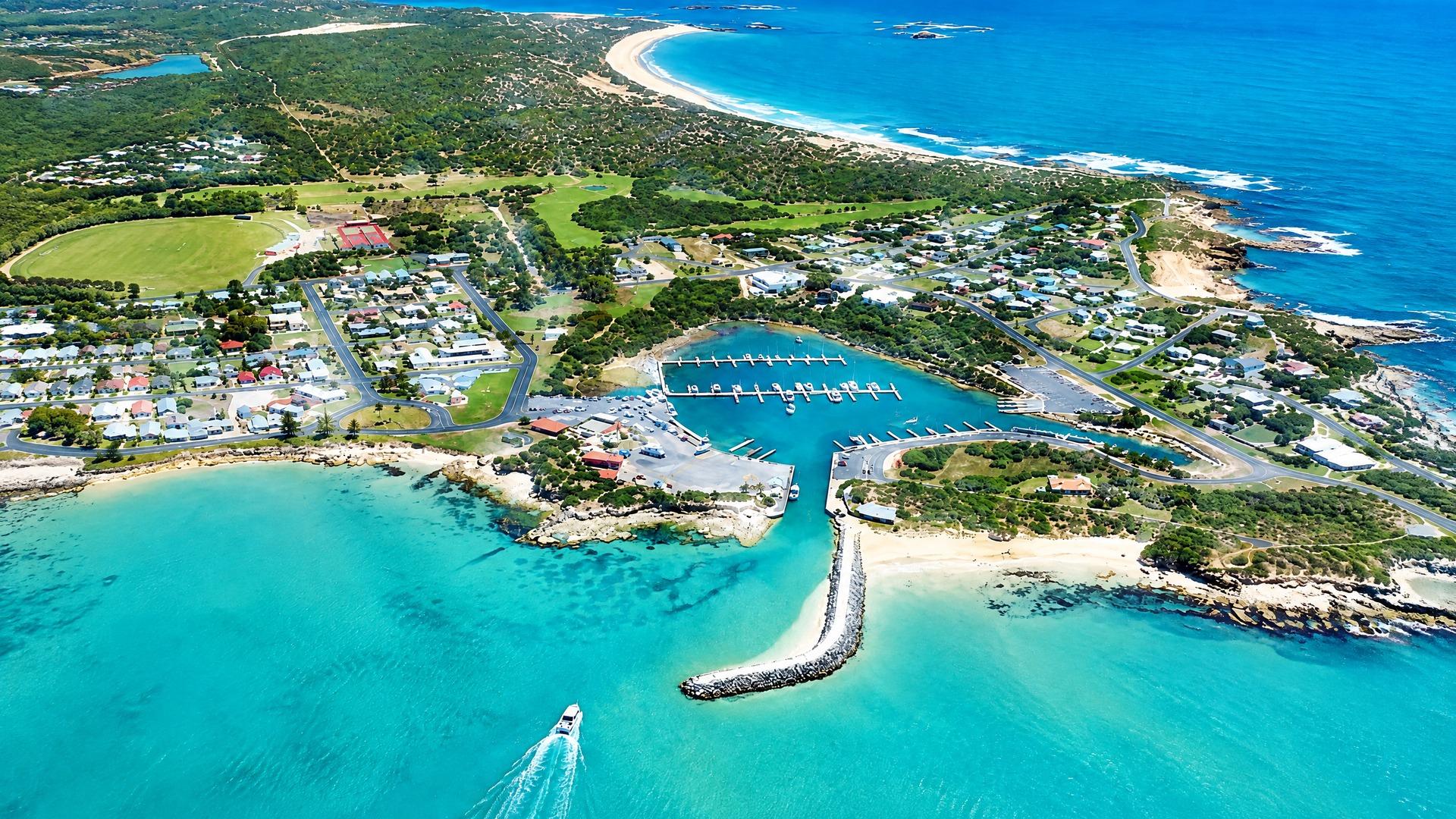
Robe is a small Limestone Coast settlement where a working coastal town and a popular summer destination share a compact setting. A heritage main street, natural harbour, long beaches, freshwater lakes and conservation country are all part of its landscape. Summer brings more visitors and hospitality activity; through the rest of the year, Robe has the scale and rhythm of a regional community. It suits people who value sea air and outdoor access while accepting fewer services and longer drives to major centres.
The setting and character
Robe sits on South Australia’s Limestone Coast, on the shore of Guichen Bay. The District Council of Robe describes it as a historic coastal village about three and a half hours by road from Adelaide and about six hours from Melbourne, positioned between the Great Ocean Road and Southern Ocean Drive routes 1. That geography helps explain its dual identity: it is a permanent community, but also a highly seasonal holiday town.
The town’s built character reflects its former importance as an international port. Royal Circus, the Customs House precinct, the Old Gaol, maritime memorials and other heritage places give the centre a strong historical presence. Chinese migration during the Victorian gold-rush period and the fishing waterfront add further layers. It is a town of older buildings, holiday houses, service businesses and working-waterfront infrastructure rather than a single-style coastal estate.
Robe is on Bunganditj Country, and Little Dip Conservation Park also recognises the traditional connection of Bunganditj and Meintangk peoples to the land and waters. Shell middens remain in the park, a reminder that the coast has a much longer human history than its colonial buildings suggest 2.
Everyday life and amenities
Daily life is concentrated around the main street, foreshore and lake-and-marina areas. The council describes a mix of food, produce, dining and retail businesses, while the South Australian Tourism Commission lists seafood, cafés, breweries, cellar doors and galleries among the town’s visitor-facing offer 3. Robe’s Visitor Information Centre is opposite Town Beach and shares a building with the public library, Local History Collection, Robe Institute and Lapwing Art Gallery. It provides local information, public internet and Wi-Fi, and a free beach wheelchair is available for hire through the centre 4.
The amenity picture is practical rather than metropolitan. Residents have a walkable civic and commercial core, recreation areas and community institutions, but should check the availability of any specialist service they require. Seasonal trade brings more choice and energy, while also making the town busier. The 2021 Census counted 1,156 people in Robe’s urban centre, with a median age of 55, an average household size of 2.1 and 1,345 private dwellings 5. The figures describe a small, older-skewing community with a substantial holiday-dwelling component.
Outdoor places and local experiences
The coast is the defining recreation asset. Long Beach extends for more than 12 kilometres, and vehicles can access the sand at designated points; surf conditions vary along its length 6. Town Beach is the central family beach, with a pontoon and seasonal swimming activity. Hoopers Beach suits swimming, snorkelling, kayaking and stand-up paddleboarding. The council advises that West Beach is not safe for swimming, so conditions cannot be assumed across the coast.
At the town’s edge, The Outlet is a meeting point between the lakes and the sea and a place to watch pelicans, ibis and egrets. Lake Butler Marina remains connected to Robe’s crayfishing identity, while Lake Fellmongery and the Drain L lakes provide settings for water sports, kayaking, fishing and birdwatching.
Little Dip Conservation Park begins about two kilometres south of the township. The Department for Environment and Water describes a rugged coastline, dunes, coastal mallee, samphire flats and a chain of lakes ranging from hypersaline Lake Eliza to Freshwater Lake 2. The park supports walks, birdwatching, fishing, surfing, camping and four-wheel driving. Its four campgrounds require booking, dogs are not permitted, and access can be closed on catastrophic or extreme fire-danger days. Beach driving requires tide, weather and track awareness; the park specifically warns about soft sand, bogging and changing conditions 2.
Getting around and practical connections
Robe is a driving-oriented place. Little Dip’s official access is via Alternate Highway 1 and park entry roads 1 2. A private vehicle is useful for beaches, lakes, rural properties and the conservation park, even though much of the central town can be explored on foot or by bicycle. Not every coastal attraction is reached by sealed road or by a standard car.
The Adelaide and Melbourne estimates are council guidance, not a guarantee for a particular address or day. For regional trips, Mount Gambier is the closest major Limestone Coast centre identified by the state tourism authority, about 90 minutes away by road 3. Check roadworks, weather and fire warnings before travelling, especially on park tracks.
Housing character and buyer due diligence
Robe’s housing stock is predominantly detached. In the 2021 Census, 95.9 per cent of occupied private dwellings were separate houses, compared with a small number of semi-detached, apartment and other dwellings 5. The wider dwelling count also shows why local impressions can be misleading: 61.3 per cent of private dwellings were unoccupied on Census night, consistent with a sizeable holiday-home and visitor-accommodation presence. That does not establish investment performance, rental returns or a suburb-wide price level, and no such figures should be inferred from it.
A prospective buyer should inspect the individual property and its planning context rather than rely on the town’s lifestyle reputation. Confirm zoning, heritage controls, bushfire requirements, wastewater or sewer arrangements, stormwater, access, easements and approval history. Robe Council’s Coastal Adaptation Strategy identifies erosion and inundation risks at Hooper and Fox beaches, the Obelisk and the marina entrance, with staged management work underway 7. Ask about property-specific coastal hazard mapping, insurance, drainage, wind exposure and future adaptation decisions. Near the park or coast, check fire-danger arrangements and whether a desired use is permitted.
A balanced conclusion
Robe offers a distinctive version of coastal living: heritage buildings and a working marina beside surf beaches, lakes and protected dunes. Its centre supports cafés, galleries, civic facilities and community life, while the surrounding landscape invites walking, fishing, paddling and surfing. Services are regional, summer can be busy, many homes are holiday-oriented, and coastal and bushfire conditions require due diligence. For someone comfortable with distance, seasonality and environmental risk, Robe is a characterful small-town base rather than a generic beach suburb.
Sources
- ▸District Council of Robe — Explore
- ▸South Australian National Parks and Wildlife Service — Little Dip Conservation Park
- ▸South Australian Tourism Commission — Robe
- ▸South Australian Tourism Commission — Robe Visitor Information Centre
- ▸Australian Bureau of Statistics — 2021 Robe Census QuickStats
- ▸District Council of Robe — See and do in Robe
- ▸District Council of Robe — Our Coastline
More from Love Livin' series

Love Livin' in Bronte NSW 2024: Your Complete Suburb Guide
Bronte NSW 2024 offers exclusive beachside living with a family-friendly atmosphere, stunning ocean pool, and strong community spirit.

Love Livin' in Potts Point NSW 2011: Your Complete Suburb Guide
Potts Point NSW 2011 combines inner-city sophistication with bohemian charm, offering excellent dining and vibrant nightlife.

Love Livin' in Darlinghurst NSW 2010: Your Complete Suburb Guide
Darlinghurst NSW 2010 offers cultural and arts district with excellent amenity and lifestyle options.