Love Livin' in Queenscliff VIC 3225
Prefer Homeowner Blog in Google Search
Love Livin' in Queenscliff VIC 3225
A compact coastal town with a strong sense of place
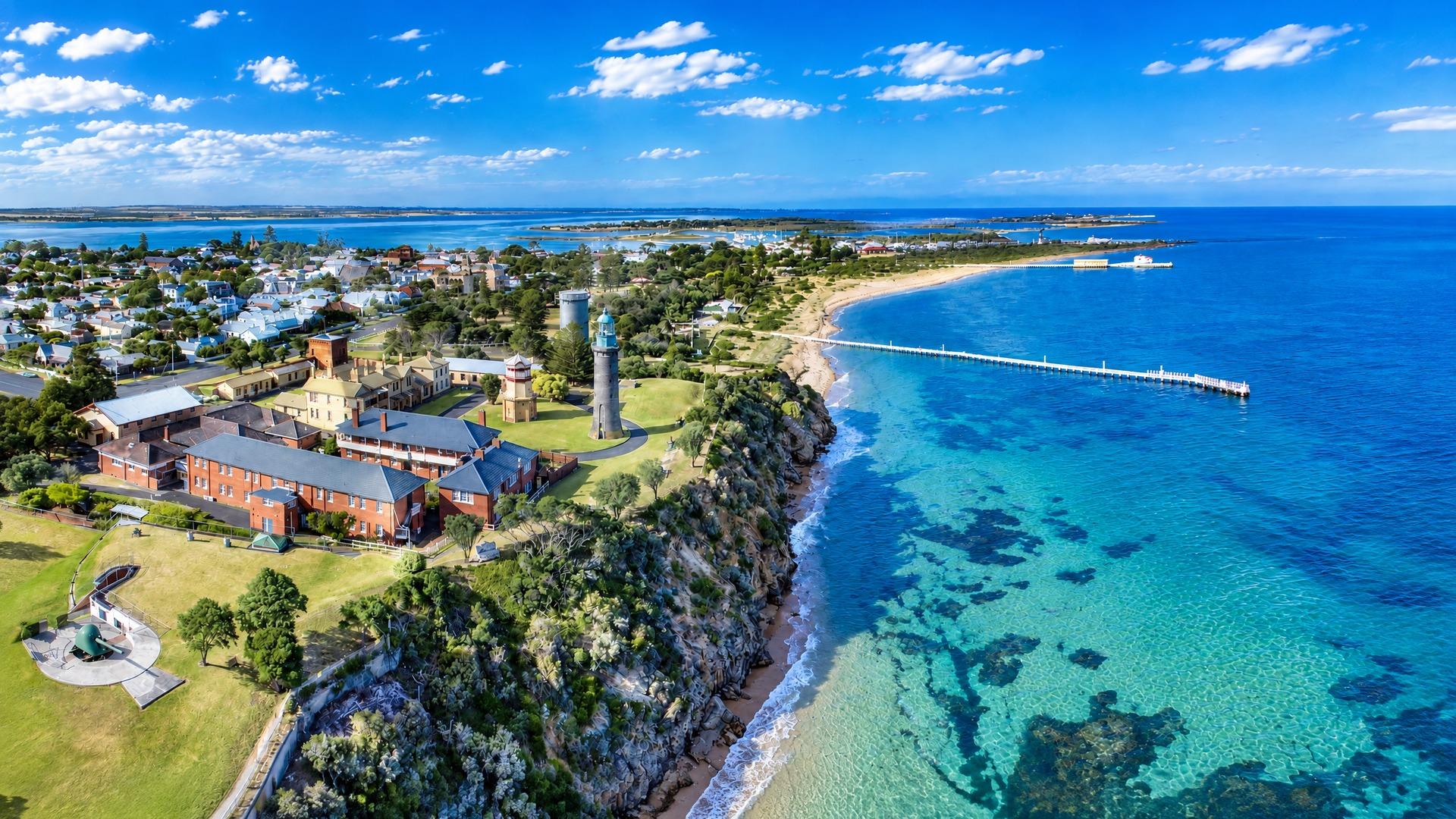
Queenscliff sits at the tip of the Bellarine Peninsula, at the entrance to Port Phillip Bay and within the Borough of Queenscliffe. The borough also includes Point Lonsdale and Swan Bay, but Queenscliff has its own distinct rhythm: a working seaside township, a visitor destination and a small residential community in one.
Days here are shaped by the water and by the seasons. Locals can walk to the foreshore, pick up essentials in the town centre, and meet friends around Hesse Street. Weekends and holidays bring more cars, ferry passengers and day-trippers, particularly when the weather is kind. The result is not a uniformly quiet village, nor a conventional suburb with a large suburban shopping strip. It is a compact place where daily errands, tourism and community life overlap.
Victoria’s official council profile describes the Borough as Victoria’s smallest local government area, covering just under 11 square kilometres. It also records a close-knit community with active volunteering, event attendance and social life. That scale can make it easier to recognise familiar faces, while also meaning that some services and higher-order shopping are found beyond the borough.
Heritage streets, bay edges and protected landscapes
Queenscliff’s defining asset is the way its built and natural settings sit together. The town was developed in the late nineteenth century as a fishing town and resort, and its formal streets, Victorian and early twentieth-century buildings, churches, hotels and fishermen’s cottages remain unusually legible. Fort Queenscliff and Queenscliff Harbour add military and maritime layers; the harbour is also the departure point for the Searoad ferry to Sorrento.
The landscape extends beyond the town centre. Foreshore pines, beaches, dunes and marine environments frame everyday recreation, while Swan Bay is recognised in the planning scheme as internationally significant and protected under international wetland and migratory-bird agreements. The coast is a reason to live here, but it is also a living environment requiring care: fragile vegetation, changing conditions and seasonal visitor pressure all matter.
Amenities and community life in a small borough
Queenscliff’s commercial centre is larger and more developed than Point Lonsdale’s. The planning scheme describes a traditional town centre with convenience goods, food and drink premises, restaurants, visitor services and specialty shops. Those facilities support both permanent households and visitors, and they also function as informal community infrastructure: a place to transact, linger and see what is happening.
Council-run tourist parks, beaches, foreshore areas and other open spaces add to the local amenity. Community life is supported by volunteering, events and clubs rather than by the scale of a metropolitan activity centre. The calendar can include music, literature, maritime and family events, while the broader Bellarine supplies additional dining, produce and recreation.
Schooling and getting around
Queenscliff Primary School is a government school at 20 Stevens Street. Its official site provides the school’s local address and contact details; Victorian Government records identify it as a primary school that opened in 1873. Families should investigate current enrolment arrangements and secondary-school options separately, because a small town’s education offer does not necessarily cover every year level or specialist program.
The main public transport connection is the Route 56 bus between Queenscliff and Geelong. Searoad Ferries states that the bus operates from within 400 metres of the Queenscliff terminal and connects in Geelong with trains to Melbourne and Warrnambool. The ferry itself carries foot passengers, bicycles and vehicles between Queenscliff and Sorrento in about 40 minutes. These links are useful for regional connections, but they are not the same as having a metropolitan rail station nearby; timetables, interchange time and service frequency should be checked for a particular commute.
Driving remains important for many households, especially for larger shopping trips, school logistics and work beyond the peninsula. Cycling and walking can be particularly convenient within the compact township, although busy visitor periods can change traffic and parking conditions. The planning scheme specifically identifies peak-period visitor parking and traffic as a local management challenge.
Housing character and checks for buyers
Most housing in the borough is detached, generally on medium-sized lots, with relatively few medium-density developments. In Queenscliff, that broad pattern is overlaid by heritage streetscapes, older cottages, substantial resort-era buildings and newer infill or redevelopment. The housing stock can therefore vary considerably from one street to the next, and a property’s apparent charm may come with maintenance, access, parking or heritage obligations.
A careful buyer should investigate the title, planning controls and any heritage overlay; confirm whether extensions, demolition, subdivision or external changes require approval; and assess the building’s exposure to salt air and coastal weather. The planning scheme also identifies low-lying areas vulnerable to coastal impacts, including sea-level rise, flooding and storm surge, as well as areas subject to bushfire hazard controls. These are not reasons to dismiss a property, but they are reasons to obtain site-specific advice rather than rely on a suburb-wide impression.
Who Queenscliff may suit
Queenscliff may suit people who want a walkable coastal setting, visible history and a community where the foreshore, town centre and local events are part of ordinary life. It can work for downsizers, couples, families who value outdoor space and primary schooling, remote or flexible workers, and buyers seeking a holiday-home or occasional-use setting—provided they understand the seasonal shift in activity and the practical responsibilities of a coastal property.
It may be less suitable for someone who needs a rapid metropolitan commute, extensive nearby shopping, a large local jobs market or predictable quiet throughout the year. The best fit is likely to be a household that values character and access to the bay, and is comfortable balancing those benefits with visitor pressure, environmental constraints and the need to travel for some services.
Sources
- ▸Victorian Government: Know Your Council – Borough of Queenscliffe Council
- ▸Victorian Government planning scheme: Queenscliffe settlement, environment, housing and transport
- ▸Visit Victoria: Queenscliff
- ▸Queenscliff Primary School
- ▸Victorian Government: Queenscliff Primary School
- ▸Searoad Ferries: How to get to Queenscliff
- ▸Borough of Queenscliffe: Tourist parks
More from Love Livin' series

Love Livin' in Bronte NSW 2024: Your Complete Suburb Guide
Bronte NSW 2024 offers exclusive beachside living with a family-friendly atmosphere, stunning ocean pool, and strong community spirit.

Love Livin' in Potts Point NSW 2011: Your Complete Suburb Guide
Potts Point NSW 2011 combines inner-city sophistication with bohemian charm, offering excellent dining and vibrant nightlife.

Love Livin' in Darlinghurst NSW 2010: Your Complete Suburb Guide
Darlinghurst NSW 2010 offers cultural and arts district with excellent amenity and lifestyle options.