Love Livin' in Dublin: Your Complete City Guide
Prefer Homeowner Blog in Google Search
Love Livin' in Dublin: Your Complete City Guide
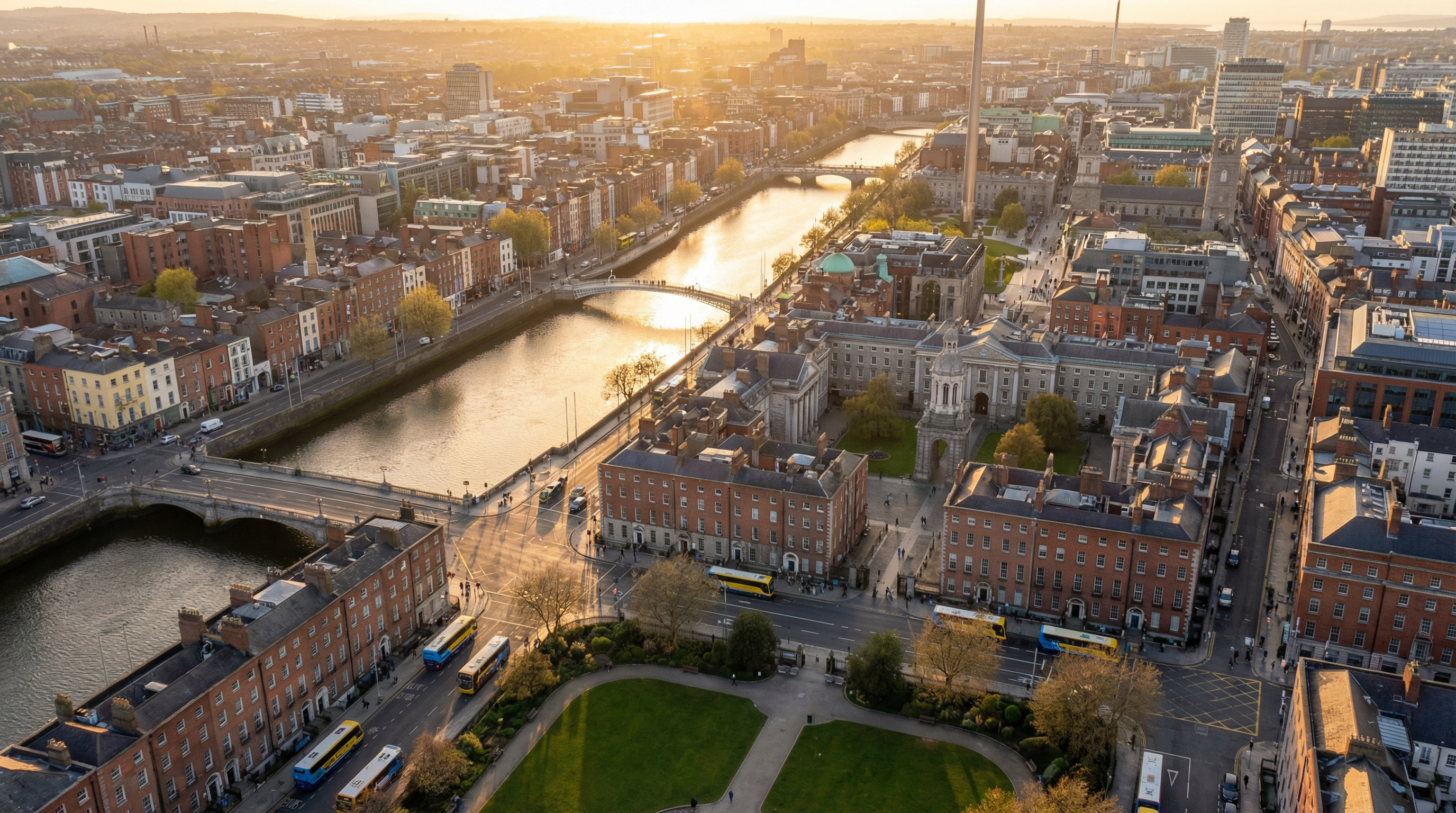
Dublin, the vibrant capital of Ireland, is a city that effortlessly blends its deep-rooted history with a modern, cosmopolitan energy. Known for its "ceol agus craic" (music and fun), the city is characterized by its friendly locals, stunning Georgian architecture, and a compact layout that makes it feel more like a collection of interconnected villages than a sprawling metropolis. Whether you are wandering through the cobblestone streets of Temple Bar or enjoying the quiet elegance of Merrion Square, Dublin offers a unique warmth that makes newcomers feel instantly at home. It is a city where tradition meets innovation, housing world-leading tech giants alongside centuries-old pubs and cathedrals. [1] [2]
The city's location on the east coast of Ireland provides a perfect balance between urban living and natural beauty. Dublin is exceptionally well-connected by a multi-modal transport network. The Dublin Area Rapid Transit (DART) offers scenic coastal commutes from Malahide in the north to Greystones in the south. Within the city, the Luas light rail system operates two main lines—the Green Line and the Red Line—connecting the suburbs to the city center with ease. Complementing these is an extensive bus network, which is currently undergoing a major "BusConnects" redesign to improve frequency and efficiency. For those who prefer two wheels, Dublin is increasingly bike-friendly, with numerous dedicated lanes and a popular city-wide bike-sharing scheme. [3] [4]
The housing market in Dublin is dynamic and reflects the city's status as a major European hub. While the market is competitive, it offers a diverse range of options, from red-brick Victorian terraces in Rathmines to sleek, modern apartments in the Silicon Docks. As of early 2026, the average property price in Dublin is approximately €630,000, though this varies significantly by neighborhood. South Dublin areas like Blackrock and Dalkey often command higher prices due to their coastal views and prestige, while West Dublin offers more accessible entry points with average prices around €450,000. The rental market is equally active, with a high demand for well-located professional lets and family homes. [5] [6]
| Area Type | Popular Neighborhoods | Average House Price (2026) | Best Suited For |
|---|---|---|---|
| City Center / Tech Hub | Grand Canal Dock, Smithfield | €550,000 - €750,000 | Young Professionals |
| Southside Suburbs | Rathmines, Ranelagh, Terenure | €600,000 - €900,000 | Families & Professionals |
| Coastal Northside | Clontarf, Malahide, Howth | €550,000 - €850,000 | Families & Retirees |
| West Dublin | Lucan, Blanchardstown, Castleknock | €400,000 - €550,000 | First-time Buyers |
Lifestyle in Dublin is centered around community and culture. The city is a UNESCO City of Literature, and its literary heritage is celebrated in its many independent bookstores and libraries. Dining in Dublin has seen a revolution in recent years, with a thriving scene that ranges from Michelin-starred restaurants to innovative street food markets. Areas like Stoneybatter and Phibsborough have become hotspots for independent cafes and artisanal bakeries. The city's social life often revolves around its legendary pubs, which serve as community hubs where live music and conversation are always on the menu. From the National Gallery to the many theaters and music venues, there is never a shortage of cultural experiences to enjoy. [1] [7]
For families, Dublin offers an exceptional environment with a strong emphasis on education and community support. The city boasts a wide array of high-quality primary and secondary schools, including prestigious institutions like Belvedere College, Alexandra College, and Nord Anglia International School. Many neighborhoods feature active community centers and sports clubs, particularly for Gaelic games (GAA), soccer, and rugby, which are deeply ingrained in the local culture. The presence of world-class universities like Trinity College Dublin and University College Dublin (UCD) further enhances the city's academic atmosphere, making it an ideal place for children to grow and learn. [8] [9]
Outdoor enthusiasts will find Dublin to be a playground of green spaces and natural wonders. The Phoenix Park, one of the largest enclosed public parks in any European capital, is home to a herd of wild fallow deer and the Dublin Zoo. St. Stephen's Green and Ivy Gardens provide tranquil escapes in the heart of the city. Beyond the urban center, the Dublin Mountains offer miles of hiking and mountain biking trails with panoramic views of the bay. The coastline provides opportunities for sea swimming at the famous Forty Foot in Sandycove, sailing in Dun Laoghaire, or birdwatching in the North Bull Island nature reserve. [1] [10]
Dublin is a city that suits a wide demographic. It is a magnet for young professionals drawn by the booming tech and financial sectors. Families are attracted by the safe neighborhoods, excellent schools, and abundance of parks. Retirees often find solace in the charming coastal villages that offer a slower pace of life while remaining connected to the city's amenities. Ultimately, Dublin is for anyone who values a high quality of life, a rich cultural tapestry, and the unique friendliness of a city that truly knows how to live. With its blend of historic charm and forward-looking ambition, Dublin remains one of the most compelling places to call home in Europe. [1] [2]
References
- ▸Dublin.ie - Living in Dublin
- ▸International Living - Explore Dublin, Ireland
- ▸Dublin Public Transport - Official Guide
- ▸Transport for Ireland - BusConnects Network Redesign
- ▸Owen Reilly - Current Trends in the Dublin Property Market 2026
- ▸Global Property Guide - Ireland's Residential Property Market Analysis 2026
- ▸Reddit - Best neighborhood for a social young professional
- ▸Edarabia - 25 Best Schools in Dublin
- ▸Superprof - The Best Secondary Schools In Dublin
- ▸The Irish Road Trip - Public Transportation in Ireland (Locals 2026 Guide)
More from Love Livin' series

Love Livin' in Bronte NSW 2024: Your Complete Suburb Guide
Bronte NSW 2024 offers exclusive beachside living with a family-friendly atmosphere, stunning ocean pool, and strong community spirit.

Love Livin' in Potts Point NSW 2011: Your Complete Suburb Guide
Potts Point NSW 2011 combines inner-city sophistication with bohemian charm, offering excellent dining and vibrant nightlife.

Love Livin' in Darlinghurst NSW 2010: Your Complete Suburb Guide
Darlinghurst NSW 2010 offers cultural and arts district with excellent amenity and lifestyle options.