Love Livin’ in Derby WA 6728
Prefer Homeowner Blog in Google Search
Love Livin’ in Derby WA 6728
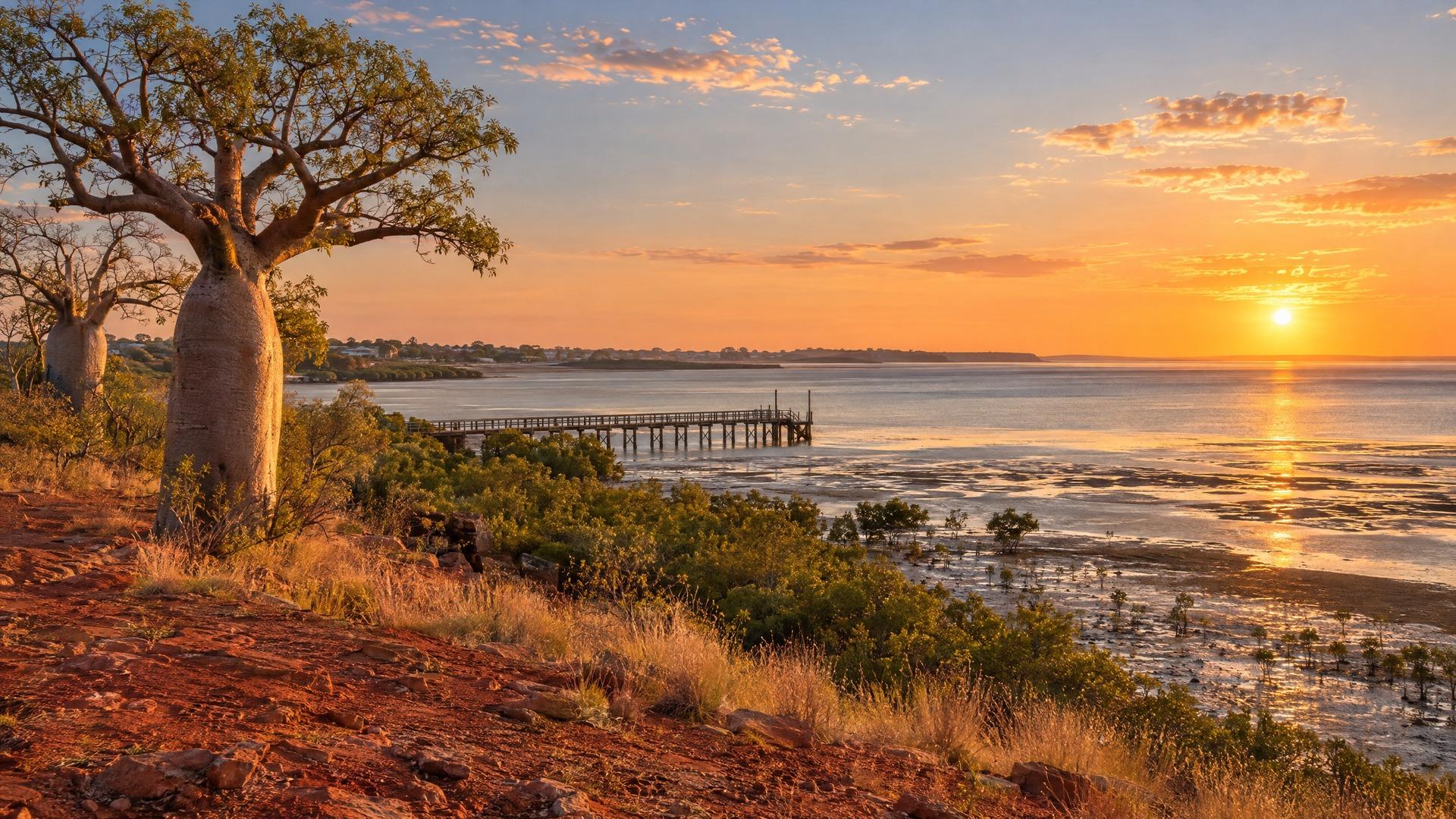
Derby is a Kimberley town with a strong sense of place. It sits at the edge of King Sound, near the mouth of the Fitzroy River, and is known for the dramatic tidal landscape that shapes daily life around the jetty and marsh. The town is also the western gateway to the Gibb River Road, giving it an unusually close connection to the rugged country east of Broome. 1
For homeowners, Derby offers something different from a conventional regional suburb. Wide streets, boab trees, a compact town centre and a pastoral and port history give it a distinctive character. The community is a practical base for work, family life and exploring the wider Kimberley.
The setting and character of Derby
Derby was established in 1883 and is recognised as the first gazetted town in the Kimberley. Its early role as a service town for the pastoral industry is still visible in the broad street layout, heritage buildings and the stories attached to its old port. 1 Traditional Owners and Aboriginal cultural knowledge are central to the region’s identity, and the Shire acknowledges the continuing connection of Aboriginal people to land, waters and community. 2
The town’s coastal setting is the defining visual feature. Derby’s jetty is popular for walking, fishing, sunset watching and seeing the tide move across King Sound. 1 Water, marsh, mangroves and red Kimberley earth create a distinctly northern setting.
Derby is about 220 kilometres east of Broome by road. The airport is approximately 9 kilometres from town via a fully sealed road, giving residents and visitors another point of connection with the region. 1 3
Everyday lifestyle and amenities
Derby’s everyday rhythm is practical and community-minded. The Shire lists a memorial swimming pool, parks and playgrounds, town ovals, sports programs and a golf course among its local recreation facilities. 2 These facilities support an outdoors-oriented lifestyle without requiring a trip to a larger centre for every activity.
The Derby Public Library is on Clarendon Street and is operated through the Shire of Derby–West Kimberley. 4 The Shire also provides environmental health services covering food businesses, swimming pools, lodging houses, caravan parks and public buildings. 5
Shopping and services are best understood in the context of a remote regional town. Buyers should check the current supply of trades, groceries, healthcare and specialist services before committing to a property.
Outdoor, cultural and local highlights
The jetty is Derby’s signature gathering point, but the town’s attractions extend well beyond the waterfront. The Derby Heritage Trail, Joon Joo Botanical Trail and Pigeon Heritage Trail offer ways to explore local stories and the town’s natural setting. The Derby visitor information point can also provide tide times and trail material. 1
South of town, the Boab Prison Tree—also known as Kunumudj—is culturally significant to local Nyikina and Warrwa people. Australia’s North West describes it as more than 1,500 years old and over 14 metres around, while asking visitors to treat the place respectfully. 1
Mowanjum Arts, near Derby, presents and supports artwork connected with Wandjina law and iconography from Worrorra, Ngarinyin and Wunumbal artists. The centre’s collection and cultural work add an important dimension to the region’s creative life. 1
For bigger adventures, Dimalurru (Tunnel Creek) National Park is reached by four-wheel drive and is generally inaccessible during the wet season. Parks and Wildlife describes a 750-metre walk through a naturally formed tunnel in the Napier Range. Road conditions can change quickly, mobile coverage is intermittent and heat can be extreme, so trips require preparation. 6 Derby is also a departure point for Horizontal Falls and Kimberley coastal tours. 1
Homes and neighbourhood choices
The local planning scheme’s Residential zone is intended to provide a range of housing and residential densities. It also allows compatible non-residential uses, reflecting the practical character of a regional town. 7
In the established townsite, buyers may encounter conventional single houses and properties with scope for an ancillary dwelling where requirements are met. The scheme separately recognises Rural and Settlement zones. In Rural zones, it generally supports no more than one single house per lot, with additional dwellings considered only in particular circumstances. 7
That makes the address and zoning especially important. A home close to town services may suit someone who values convenience, while a larger or more rural holding may appeal to buyers wanting space and a different relationship with the landscape. The trade-off can include more maintenance, different access arrangements and greater reliance on a vehicle.
Practical considerations for prospective buyers
Derby’s climate and remoteness should be part of a property inspection. Look closely at shading, ventilation, air-conditioning, roof condition and outdoor living areas. Confirm how water, wastewater, power, internet and rubbish services operate for the particular address.
Coastal exposure is another issue to investigate. The Shire’s coastal vulnerability work identifies portions of the Derby townsite as potentially exposed to coastal inundation and erosion over a 100-year planning timeframe, with impacts considered for present day, 2060 and 2110. 8 This is not a substitute for property-specific advice, but it is a clear reason to review the relevant mapping and ask the Shire about a particular lot before buying.
Bushfire and wet-season access also deserve practical attention. The Shire provides information on development or subdividing land in bushfire-prone areas, while Parks and Wildlife warns that roads in the wider Kimberley can close or change rapidly during the wet season. 2 6 For any property beyond the core townsite, confirm road conditions, emergency access and servicing arrangements rather than assuming they match town services.
A town with room to live differently
Derby suits buyers who value a strong Kimberley setting, community facilities and easy access to outdoor and cultural experiences. It rewards a practical approach: inspect the home carefully, understand the zoning and services, and take the coastal and seasonal environment seriously. In return, life here offers wide skies, meaningful local stories and a front-row seat to one of Western Australia’s most distinctive landscapes.
References
More from Love Livin' series

Love Livin' in Bronte NSW 2024: Your Complete Suburb Guide
Bronte NSW 2024 offers exclusive beachside living with a family-friendly atmosphere, stunning ocean pool, and strong community spirit.

Love Livin' in Potts Point NSW 2011: Your Complete Suburb Guide
Potts Point NSW 2011 combines inner-city sophistication with bohemian charm, offering excellent dining and vibrant nightlife.

Love Livin' in Darlinghurst NSW 2010: Your Complete Suburb Guide
Darlinghurst NSW 2010 offers cultural and arts district with excellent amenity and lifestyle options.