Love Livin' in Coober Pedy SA 5723
Prefer Homeowner Blog in Google Search
Love Livin' in Coober Pedy SA 5723
An outback town with its own tempo
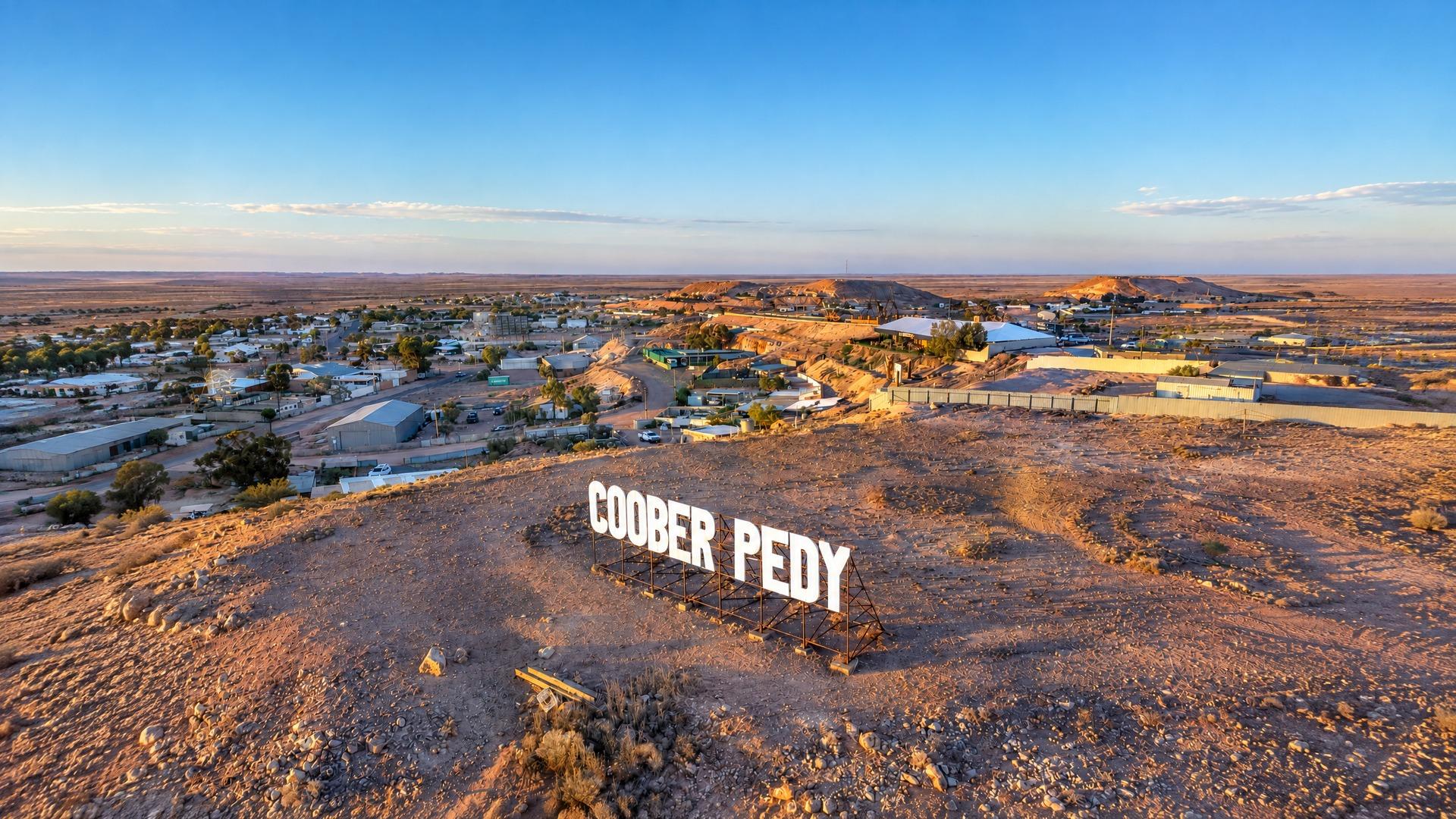
Coober Pedy sits in South Australia’s far north on the Stuart Highway, roughly 840–850 kilometres north of Adelaide and about 680 kilometres south of Alice Springs. It is a remote opal-mining district whose rhythm is shaped by distance, weather, tourism and the fortunes of the field.
The first opal discovery was recorded in 1915. By 1920 the name Coober Pedy had been adopted for the opal field, drawn from an Aboriginal expression commonly translated as “white man in a hole”. Today, the District Council describes a population of approximately 2,000, while also acknowledging the area’s much older Aboriginal history and the Antakirinja Matu-Yankunytjatjara people as Traditional Owners. Mining remains part of the town’s identity, but council’s history notes that tourism has become increasingly important as prospecting activity and the number of active miners declined.
Everyday life is practical and close-knit. Hutchison Street and the town’s compact centre bring together essential shopping, services, cafés and visitor businesses, while the broader landscape begins almost immediately beyond the built-up area. Summer heat makes early starts and shade more than lifestyle preferences; they are part of planning the day.
Moon plains, dugouts and a living mining story
Coober Pedy’s defining landscape is an arid, pale, almost lunar field of spoil heaps, low rises and exposed earth. The absence of a conventional leafy streetscape is central to its character. So are the dugouts: homes, churches, shops and accommodation excavated into hillsides or underground to moderate the desert climate. South Australian tourism describes the town as an underground city, but the lived reality is more varied—some properties are fully or partly underground, while others are conventional surface buildings.
The Old Timers Mine and Museum presents an historic mine, early underground homes and local mining history; Umoona Opal Mine and Museum interprets Aboriginal and European settlement, fossils and opal. The Catacomb Church, Serbian Orthodox Church and St Peter and Paul’s Catholic Church show how migrant and faith communities made a home in the field.
For outdoor perspectives, Kanku–Breakaways Conservation Park offers striking coloured ranges and lookouts across a distinctive desert setting. Council’s visitor guide also points to the Moon Plain, the Dog Fence, the Big Winch viewpoint and a public noodling area where visitors can fossick in a designated setting. Residents should check access, road conditions and permits before travelling.
Services, routines and community life
Despite its isolation, Coober Pedy has a useful base of local amenities. The council provides a jointly funded School and Community Library, a seasonal swimming pool, Mini Gems long day care for children from six weeks to preschool age, and children’s and parenting support programs. These facilities also provide places to meet neighbours.
Council’s visitor guide records a volunteer-run drive-in that screens films on many Saturday nights, community clubs, churches, the RSL and cultural associations. Cafés, takeaway food and small supermarkets support day-to-day needs, although the range and opening hours of individual businesses can change.
Schooling and getting around
Coober Pedy Area School provides Reception to Year 12, with a preschool onsite. The school’s own information highlights a culturally diverse enrolment, including Aboriginal students and students from English-as-an-additional-language backgrounds. That makes the school more than a place for lessons: it is one of the town’s central institutions and a useful indicator of the community’s scale and diversity. Families should contact the school about current enrolment and support.
The Stuart Highway is the principal road connection. Council says the drive from Adelaide is about 840 kilometres, and the journey from Alice Springs is about 680 kilometres. Regional Express (REX) generally operates flights between Coober Pedy and Adelaide several times a week, with a flight time of about two hours, though schedules should be checked before relying on them. Greyhound services also connect Adelaide and Alice Springs, with council listing journeys of about 11 hours and eight hours respectively.
Transport within town requires planning. Council advises that there are no taxi services and no regular airport-to-town shuttle bus; airport transfers need to be arranged with the local shuttle or accommodation provider, or handled with a hire car. That car dependence is a practical consideration for workers, families and anyone who wants to reach outlying attractions. Connectivity should be checked at the specific property rather than assumed from a town-level description.
Housing character and questions for buyers
Housing in Coober Pedy is unusually varied. A buyer may encounter a conventional fibro, brick or lightweight home, a property incorporating an excavated room or a more extensive dugout, worker-style accommodation, or premises with a mixed residential and commercial history. Underground living can provide a distinctive buffer from external temperatures, but it is not automatically low-maintenance. The condition of ceilings, ventilation, drainage, moisture management, electrical systems and any old mine workings deserves specialist attention.
The mining landscape also makes due diligence especially important. Before committing, buyers should confirm the title and boundaries, zoning and permitted use through the South Australian planning system, and whether past or proposed works have approvals. Council directs planning and development applications through the PlanSA portal, while onsite wastewater septic applications are handled by the District Council. A conveyancer, building inspector and appropriately experienced engineer can help assess excavation, ground stability, services and insurance questions. These checks are more useful than relying on a property’s novelty or an assumed resale story.
The market is small and conditions can differ materially between properties, particularly where a home has mining-related features or unusual construction. Buyers should review current local evidence independently.
Who might feel at home here?
Coober Pedy may suit people who actively want remoteness, big skies and a community where mining history, multicultural heritage and tourism meet. It can work for households connected to local education, services, mining or visitor industries, and for residents who enjoy making their own recreation rather than expecting a metropolitan program of events. The town may also appeal to someone drawn to underground architecture and desert landscapes as an everyday environment, not merely a weekend novelty.
It is less likely to suit anyone who needs frequent city access, extensive retail choice, conventional public transport, predictable specialist services or a standard suburban streetscape. The strongest fit is likely to be a prepared resident: someone comfortable with long distances, extreme conditions, advance planning and careful property due diligence, while valuing the distinctive community and landscape that cannot be replicated in an ordinary suburb.
Sources
- ▸District Council of Coober Pedy: History
- ▸District Council of Coober Pedy: Community Services
- ▸District Council of Coober Pedy: Getting to Coober Pedy
- ▸District Council of Coober Pedy: Building and Development Plans
- ▸Government of South Australia, Department for Energy and Mining: Opal fields
- ▸Coober Pedy Area School
- ▸South Australian Tourism Commission: Coober Pedy
- ▸District Council of Coober Pedy: Short Tours, Self Guide, Attractions and Eateries
More from Love Livin' series

Love Livin' in Bronte NSW 2024: Your Complete Suburb Guide
Bronte NSW 2024 offers exclusive beachside living with a family-friendly atmosphere, stunning ocean pool, and strong community spirit.

Love Livin' in Potts Point NSW 2011: Your Complete Suburb Guide
Potts Point NSW 2011 combines inner-city sophistication with bohemian charm, offering excellent dining and vibrant nightlife.

Love Livin' in Darlinghurst NSW 2010: Your Complete Suburb Guide
Darlinghurst NSW 2010 offers cultural and arts district with excellent amenity and lifestyle options.