Love Livin' in Bicheno TAS 7215
Prefer Homeowner Blog in Google Search
Love Livin' in Bicheno TAS 7215
Overview
Nestled along the coastline of Tasmania’s East Coast, Bicheno is a township that strikes a balance between its rugged maritime heritage and a vibrant modern community. Serving as a pivotal stop along the Great Eastern Drive, this seaside enclave is home to approximately 1,100 permanent residents. While the population expands during summer, Bicheno retains a grounded, year-round character that distinguishes it from purely seasonal destinations.
The town’s history is deeply intertwined with the sea. Originally known as Waubs Harbour, it was named after Wauba Debar, an Aboriginal woman whose bravery in saving sealing companions during a storm is a cornerstone of local lore. Renamed in 1851 after James Ebenezer Bicheno, the British Colonial Secretary, the town has evolved from a whaling station and coal-exporting port into a commercial fishing hub and sophisticated nature-based tourism centre. Today, while the fishing industry remains active—particularly for crayfish and abalone—the community places a high value on conservation and environmental stewardship.
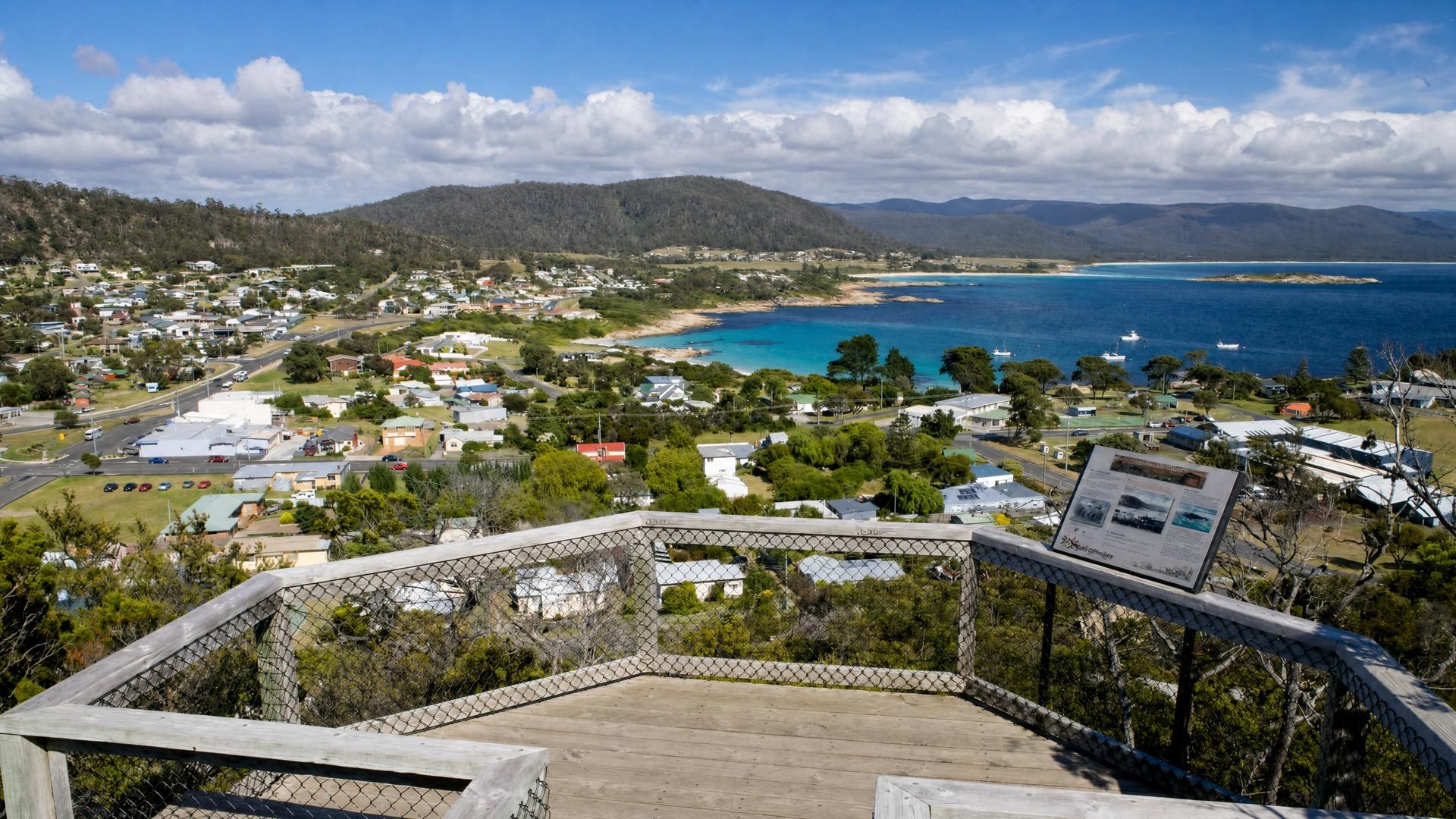
Geographically, Bicheno is defined by a dramatic granite coastline where orange lichen-covered boulders meet the turquoise waters of the Tasman Sea. Sheltered by surrounding hills, the town benefits from a mild, temperate microclimate, often enjoying more sunshine and less rainfall than other parts of Tasmania. This unique environment supports a diverse range of flora and fauna, making it a sanctuary for those who appreciate the natural world.
Lifestyle & amenity
Lifestyle in Bicheno is dictated by the rhythm of the tides and the coastal light. Residents frequently enjoy the Bicheno Foreshore Footway, a scenic track winding past iconic features like the Bicheno Blowhole, which erupts with plumes of seawater during high swells. Nearby, Diamond Island is accessible via a sandbar at low tide, offering a unique opportunity to explore a secluded offshore environment.
The town is perhaps most famous for its resident colony of little penguins. Each evening, these birds return from the ocean to their burrows, a spectacle that has fostered a strong culture of wildlife appreciation. Offshore, the Governor Island Marine Reserve stands as one of Australia’s premier diving locations, featuring clear waters, sponge gardens, and kelp forests that attract underwater enthusiasts globally.
Bicheno also serves as a gateway to two spectacular national parks. Douglas-Apsley National Park, located just inland, offers river gorges and tranquil waterholes like the Apsley Waterhole, a popular local swimming spot. Meanwhile, the world-renowned Freycinet National Park, home to Wineglass Bay, is situated only 30 minutes to the south, providing world-class hiking and photography opportunities.
Community life is centred around the "Bicheno Triangle," a revitalised precinct featuring an amphitheatre, modern playground, and green spaces. The town is well-served by essential amenities, including the Bicheno Medical Centre, a pharmacy, and the Bicheno Library. These facilities ensure that residents have access to healthcare and educational resources without the need for extensive travel.
The culinary scene reflects Bicheno’s maritime roots. The Gulch is the heart of the town’s seafood industry, where fresh fish, chips, and locally caught lobster are enjoyed overlooking the working harbour. Local bakeries, such as the Blue Edge Bakery, are famous for their scallop pies and serve as social hubs for the community. Annual events like the Bicheno Food and Wine Festival in November and the Bicheno Beams light show in July further enrich the local cultural calendar.
Getting around
Bicheno is primarily a car-dependent community, though its compact centre is easily navigable on foot or by bicycle. The Tasman Highway (A3) provides a scenic connection to Hobart and St Helens, with the drive to the capital taking approximately two and a half hours. Launceston is accessible via the Lake Leake Highway in roughly two hours.
Public transport is provided by Tassielink Transit, which operates regular bus services connecting Bicheno to Hobart and other East Coast towns. The 737 service is the primary link for regional transit and medical appointments. While the frequency is suited more to planned travel, it remains a vital link for non-drivers.
Within the town, the Foreshore Footway and various internal paths encourage active transport. The flat terrain of the central township makes cycling a viable way to reach shops, the primary school, and beaches. For maritime enthusiasts, the town features excellent boat launching facilities at the Gulch, providing safe access to Waubs Bay and the open ocean.
Local character & property
The architectural character of Bicheno reflects its evolving history. Older parts of town feature classic Tasmanian "shacks"—modest holiday homes that speak to a simpler era of coastal living. These are increasingly interspersed with contemporary, architecturally designed residences that maximise ocean views. The Glamorgan Spring Bay Council’s Bicheno Structure Plan manages this growth to ensure new developments respect the town’s unique coastal aesthetic.
The property market is diverse, ranging from elevated hillside blocks to quiet streets within walking distance of Bicheno Primary School. A strong sense of community pride is evident in well-maintained gardens and active local organisations like the Bicheno Community Development Association. The town has a distinct "lived-in" feel, with local businesses ensuring activity outside the peak tourist season.
Demographically, Bicheno is home to a mix of long-term residents and a growing number of sea-changers. While the median age is higher than the state average, reflecting its popularity as a retirement destination, there is a resilient population of young families drawn to the safe environment and outdoor lifestyle. This blend of generations contributes to a stable and welcoming social fabric.
Who it may suit
Bicheno is an ideal fit for the nature enthusiast who desires a life lived in close proximity to the elements. The ability to witness penguins returning at dusk or explore national parks on a whim is a rare luxury that defines the local experience. It suits those who find solace in the ocean and the bush and who value environmental stewardship.
The town is also a premier choice for the active retiree. With a local golf club, bowls and RSL club, and a network of walking tracks, there are ample opportunities for social engagement. The presence of essential healthcare services and a supportive community network provides the peace of mind necessary for coastal living.
Finally, Bicheno appeals to young families seeking a departure from urban pressures. The local primary school is a central pillar of the community, and the town’s safety and abundance of natural playgrounds make it an exceptional place for children to grow up. For those who can work remotely, Bicheno offers a lifestyle where the reward is a lifetime of coastal memories.
Further reading
More from Love Livin' series

Love Livin' in Bronte NSW 2024: Your Complete Suburb Guide
Bronte NSW 2024 offers exclusive beachside living with a family-friendly atmosphere, stunning ocean pool, and strong community spirit.

Love Livin' in Potts Point NSW 2011: Your Complete Suburb Guide
Potts Point NSW 2011 combines inner-city sophistication with bohemian charm, offering excellent dining and vibrant nightlife.

Love Livin' in Darlinghurst NSW 2010: Your Complete Suburb Guide
Darlinghurst NSW 2010 offers cultural and arts district with excellent amenity and lifestyle options.